Orphanages; such a broad subject. It seems that the more we do in class, the broader my point gets. I keep adding more and more stuff to my stance because I want the audience to know it, and agree with it! I have noticed that a lot of the information out there on orphanages is about one or two that treat their children terribly. What about all the good ones!? Why do we always forget the good things? People tend to focus on the bad, they don't realize how much better things are by focusing on the good. By only reporting about bad orphanages it hurts the welfare of the many good ones.
My view on orphanages has only become stronger. I feel like orphanages can be such a good thing for so many desperate children out there! I am for anything that helps someone be a better person. I agree with anything that brings hope into anothers' life. Orphanages do this, and more! Orphanages create a possibility of change and of a brighter future for millions. It only takes one person to give someone a chance; that's all anyone needs. A simple chance, and with that great good can come from it. Orphanages are like that one person; orphanages are giving many children a chance. Sometimes in life you have to look past the bad things that people point out. If you do, just like in the case of orphanages, you will see that good is found everywhere.
Thursday, May 27, 2010

Tuesday, May 25, 2010
Understanding Orphanage Related Lingo
What comes to mind when you hear the word homeless? Or family? Do these words have any relation to each other? The five words I chose to define were homeless, home, family, orphan, and the phrase “full-filling their duty”. I use homeless as a state of feeling in which the person feels they have nowhere to call home, or place they feel they can stay. Home is more of a state of mind in my essay because anywhere can be a home if you want it to be and because you consider yourself loved there. Family is used as people who accept you and love you even though you might not be biologically related. Finally, an orphan would be considered as anyone who doesn’t have a true place to call home; like those taken away from bad home situations.
These words help you to know who resides in an orphanage, and to realize a little more about the situations these children come from. They describe how many of the orphans feel about living in an orphanage, and what qualifies as a home or family. All of these things lead up to help the audience know what the orphanages’ duty is and if they are full-filling it. By learning what these words mean and using them throughout my essay I am hoping to help people realize that orphanages are indeed “full-filling their duty”.
These words help you to know who resides in an orphanage, and to realize a little more about the situations these children come from. They describe how many of the orphans feel about living in an orphanage, and what qualifies as a home or family. All of these things lead up to help the audience know what the orphanages’ duty is and if they are full-filling it. By learning what these words mean and using them throughout my essay I am hoping to help people realize that orphanages are indeed “full-filling their duty”.
Saturday, May 22, 2010
Providing Dignity
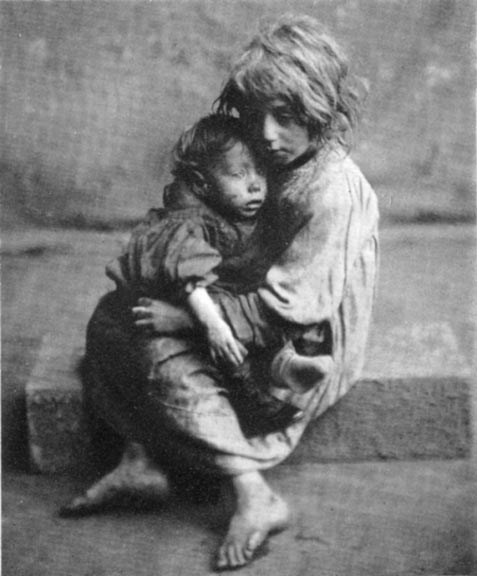
This photograph is definitely a situation because it’s not just happening to these children; it’s happening to many children all over the world. Many children are living on the streets with no food, clothing, or shelter. They literally have nothing. Yet, do many people do anything about it? Most of the time people are too busy worrying about themselves than to realize how much other people are suffering in the world. Orphanages are a refuge for children like this. Orphanages provide homes, clothing, food, and ease the burden of these children; even if only a little.
How does this relate to my topic? Well, I feel that in providing a refuge for many children all over the world, orphanages are indeed doing their job. We always tend to think of orphanages as adoption places; however, there is more to them than just finding a family for a child. They were built to provide shelter for children with a bad home life or for those who don't even have a home. They give many children dignity, so they don't have to live in shame all their lives. Most importantly orphanages provide children with hope that life can and will be better.
Tuesday, May 18, 2010
Care in Orphanages has improved!
Before I begin my assignment I want to state what my topic is. I want people to realize that sometimes orphanages are a better solution for children and that even though potential family numbers are low, they are still succeeding in their cause. I feel the media portrays all orphanages as terrible, and many times they aren’t. This article might seem kind of far-fetched according to my topic, but what made me choose it was this one sentence: “Since the middle part of this century, public housing was seen as a way to offer the poor more dignity.” Public housing includes orphanages. Orphanages truly do provide a more dignified way of living for many children. It is better for them to be in an orphanage than scrounging for a way to live on the streets, or to be in a family that doesn’t truly care for them or their needs.
Analysis:
The article, “As Times Change, How We Care for the Poor Evolves,” major premise is that as times have changed, so has care for the poor been improved. Diane Dunne doesn’t force the argument on her readers or act like she knows more than them; she simply states and informs her readers how things have changed. She uses a sequenced pattern that begins with what care for the poor was like many years ago until she reaches the point it is at today.
When reading through this article it is clear to see that she uses inductive reasoning instead of deductive. For example, Dunne tells how before the 1800s all who were poor lived in Almhouses. Later on she proceeds to say during the middle of the 1800s separate institutions were made for the different types of poor; which are homeless, parentless, having no food, and having no money. Dunne uses many examples like this one throughout the article to create a vivid image of how things were in the past and how they have become. These specific examples bring the audience to form the general idea that caring for the poor has improved.
Also, this article is one big analogy. As mentioned before the whole point of the article is to say that caring for the poor has improved and Dunne does it by comparing the past with the present. All in all, orphanages are poverty stricken children. Just like all the other institutions that have been provided for the poor, orphanages have improved with the times. However; people are so stuck on how they used to be that they can‘t see past the bad to recognize the good that has come from them.
Work Cited:
Dunne, Diane. “As Times Change, How We Care for the Poor Evolves.” Chicago Tribune 27 November 2001. http://www.chicagotribune.com/
Analysis:
The article, “As Times Change, How We Care for the Poor Evolves,” major premise is that as times have changed, so has care for the poor been improved. Diane Dunne doesn’t force the argument on her readers or act like she knows more than them; she simply states and informs her readers how things have changed. She uses a sequenced pattern that begins with what care for the poor was like many years ago until she reaches the point it is at today.
When reading through this article it is clear to see that she uses inductive reasoning instead of deductive. For example, Dunne tells how before the 1800s all who were poor lived in Almhouses. Later on she proceeds to say during the middle of the 1800s separate institutions were made for the different types of poor; which are homeless, parentless, having no food, and having no money. Dunne uses many examples like this one throughout the article to create a vivid image of how things were in the past and how they have become. These specific examples bring the audience to form the general idea that caring for the poor has improved.
Also, this article is one big analogy. As mentioned before the whole point of the article is to say that caring for the poor has improved and Dunne does it by comparing the past with the present. All in all, orphanages are poverty stricken children. Just like all the other institutions that have been provided for the poor, orphanages have improved with the times. However; people are so stuck on how they used to be that they can‘t see past the bad to recognize the good that has come from them.
Work Cited:
Dunne, Diane. “As Times Change, How We Care for the Poor Evolves.” Chicago Tribune 27 November 2001. http://www.chicagotribune.com/
Tuesday, May 11, 2010
What do the Experts have to Say?
A few of my articles are written by Clifford J. Levy. Now I bet your wondering who that is and how does he relate to the topic of orphanages. Well the truth is, Levy is just a reporter that has been assigned to write about what is happening with Russia’s systems. Now I know that doesn’t sound like a very good resource, but his articles provide good information about what is happening. The fact that he is specifically assigned to this topic means he has to study it out more and research it. In fact, he has been over in Moscow collecting information and interviewing experts on the matter. He quotes these experts quite often in his articles; some of whom are: Boris L. Altshuler(director of Right of a Child), Yelena B. Mizulina(Chairwomen of the parliamentary committee of family and children), and Lidiya Y. Slusareva(Director of orphanage No. 11). Although Levy may not be an official expert on the matter he uses valid information obtained from experts whom he quotes and gives credit to in his articles.
My second article is written by Nataliya Vasilyeva and Kristin M. Hall. The reason I chose this article is because it directly quotes the family that started this whole adoption issue in Russia. None of the other articles really tell about why this family sent their adopted son back to the orphanage. This article quotes their feelings and what was happening with the little boy. Not only does it directly quote them but it also directly quotes people like Joseph LaBarbera, who specializes in psychological children evaluation and has worked with Russian orphans. The information presented in this article is from people who have a part to play in all of the commotion; whether it be they started it or they are experts trying to help solve the matter.
My second article is written by Nataliya Vasilyeva and Kristin M. Hall. The reason I chose this article is because it directly quotes the family that started this whole adoption issue in Russia. None of the other articles really tell about why this family sent their adopted son back to the orphanage. This article quotes their feelings and what was happening with the little boy. Not only does it directly quote them but it also directly quotes people like Joseph LaBarbera, who specializes in psychological children evaluation and has worked with Russian orphans. The information presented in this article is from people who have a part to play in all of the commotion; whether it be they started it or they are experts trying to help solve the matter.
Subscribe to:
Comments (Atom)
