Orphanages; are they really a home for the many children that inhabit them? Do they in fact need to be changed for the better? All of a these questions have arisen in the past few months; yet they haven’t been solved. When so many people have been complaining that orphanages are terrible places for children, they sure haven’t tried to do anything to change that. They write about it, but it doesn’t change how things are. If you feel something needs to be changed, you have to take action. You can’t be the one to sit back and wait for someone else to start it. You are the beginning in many great things and have the chance to change anything for the better. If we didn’t sit back and hope someone, someday would try to do something about orphanages imagine the things they could do, the way they could help the children, and the better places they would become.
All people want to do is get rid of orphanages because they aren’t as effective as a normal house or home. Many believe they aren’t the “best” places for a child to reside. But how can they be better when we only look at them as if they are nothing; and can’t become anything? People never see the good anymore. When was the last time you heard something good about an orphanage compared to something bad? Orphanages aren’t the “best” for children because people only see the bad and don’t try to improve them! People have put this terrible image into society’s head that orphanages are cruel and don’t help their children. However; if you were to take a look at what they are doing yourself, you would see the wonders they can do for many.
The fact is we can change society’s view by being open-minded and first learning what orphanages do for children. Don’t just assume things until you have done the research and studied it out. Put yourself in the place of these orphans. How do you think they would feel about being given a place to live, when all they were good enough before was the streets? How do you feel when you are given a second chance? It’s the same feeling; these kids are being given a second chance to become the best they can be.
If you believe that orphanages have good intentions, then try to help improve their circumstances. Maybe donate money to help provide more staff, a better education, and even better activities for the children. Volunteer at one; there are more orphanages around you than you realize. There are even opportunities for people to volunteer in foreign country orphanages. These are some ways to show society the good orphanages provide, and to show that with everyone’s help they can even be improved for the better. Some people have already donated and volunteered. If someone is willing to take the time or spend the money on bettering orphanages, then it is obviously needed and something of great worth.
Thursday, June 10, 2010

Thursday, June 3, 2010
An Orphanages Cause
Orphanages provide homes for children. The number of children on the street is dwindling due to the fact that orphanages give them a place to stay. While staying in the orphanage these children are given a better chance to excel in life. They have a greater chance of finding a home; whether it is by adoption or just simply living at the orphanage. Orphanages help homeless children receive things they cannot obtain on their own; they give children education, friends, hope, and love.
If people would just see the good that orphanages can do, could you imagine how much better they could become? People might actually take the time to think about them and help better them in many ways. If people were able to see the good in them and let others know about it, orphanages repetition would improve. Orphanages seem to be labeled as terrible; therefore most view them that way. Labeling is a hard obstacle to overcome. So if one person was to try and look past the label that has been placed on them they would see the good that they do for many around the world.
If people would just see the good that orphanages can do, could you imagine how much better they could become? People might actually take the time to think about them and help better them in many ways. If people were able to see the good in them and let others know about it, orphanages repetition would improve. Orphanages seem to be labeled as terrible; therefore most view them that way. Labeling is a hard obstacle to overcome. So if one person was to try and look past the label that has been placed on them they would see the good that they do for many around the world.
Tuesday, June 1, 2010
Sparking an Interest
I’ve noticed that with every article they have a bolded title that captures your attention. It’s something that sparks interest and makes you wonder what they are talking about, so you’ll want to read it. A good title is very important because it is what motivates someone to read what you’ve wrote. If you have a lame title, people will assume that you have a lame paper. The writers also make the first or second sentence of the paper something clever to make the audience enjoy his/her writing style and want to continue reading. After that they go straight into what they will be talking about. This technique is good because we don’t have long attention spans and it quickly obtains the readers’ focus. Another tool they use is lots of statistics and true stories to back up their claim. It almost seems that with the stories they try to pick the worst or most touching ones. Also, just like the articles we read in class, they give a easy to see reasons why they have that opinion. Each reason connects with the next, so you want to keep reading. Finally, their ending is very forward. They want to leave an impression on the audience because the ending is what a reader will remember the most. A good beginning catches the readers’ attention, while a great ending leaves them thinking about what was written and that they enjoyed the paper.
Thursday, May 27, 2010
Finding Good When All That's Seen is the Bad
Orphanages; such a broad subject. It seems that the more we do in class, the broader my point gets. I keep adding more and more stuff to my stance because I want the audience to know it, and agree with it! I have noticed that a lot of the information out there on orphanages is about one or two that treat their children terribly. What about all the good ones!? Why do we always forget the good things? People tend to focus on the bad, they don't realize how much better things are by focusing on the good. By only reporting about bad orphanages it hurts the welfare of the many good ones.
My view on orphanages has only become stronger. I feel like orphanages can be such a good thing for so many desperate children out there! I am for anything that helps someone be a better person. I agree with anything that brings hope into anothers' life. Orphanages do this, and more! Orphanages create a possibility of change and of a brighter future for millions. It only takes one person to give someone a chance; that's all anyone needs. A simple chance, and with that great good can come from it. Orphanages are like that one person; orphanages are giving many children a chance. Sometimes in life you have to look past the bad things that people point out. If you do, just like in the case of orphanages, you will see that good is found everywhere.
My view on orphanages has only become stronger. I feel like orphanages can be such a good thing for so many desperate children out there! I am for anything that helps someone be a better person. I agree with anything that brings hope into anothers' life. Orphanages do this, and more! Orphanages create a possibility of change and of a brighter future for millions. It only takes one person to give someone a chance; that's all anyone needs. A simple chance, and with that great good can come from it. Orphanages are like that one person; orphanages are giving many children a chance. Sometimes in life you have to look past the bad things that people point out. If you do, just like in the case of orphanages, you will see that good is found everywhere.
Tuesday, May 25, 2010
Understanding Orphanage Related Lingo
What comes to mind when you hear the word homeless? Or family? Do these words have any relation to each other? The five words I chose to define were homeless, home, family, orphan, and the phrase “full-filling their duty”. I use homeless as a state of feeling in which the person feels they have nowhere to call home, or place they feel they can stay. Home is more of a state of mind in my essay because anywhere can be a home if you want it to be and because you consider yourself loved there. Family is used as people who accept you and love you even though you might not be biologically related. Finally, an orphan would be considered as anyone who doesn’t have a true place to call home; like those taken away from bad home situations.
These words help you to know who resides in an orphanage, and to realize a little more about the situations these children come from. They describe how many of the orphans feel about living in an orphanage, and what qualifies as a home or family. All of these things lead up to help the audience know what the orphanages’ duty is and if they are full-filling it. By learning what these words mean and using them throughout my essay I am hoping to help people realize that orphanages are indeed “full-filling their duty”.
These words help you to know who resides in an orphanage, and to realize a little more about the situations these children come from. They describe how many of the orphans feel about living in an orphanage, and what qualifies as a home or family. All of these things lead up to help the audience know what the orphanages’ duty is and if they are full-filling it. By learning what these words mean and using them throughout my essay I am hoping to help people realize that orphanages are indeed “full-filling their duty”.
Saturday, May 22, 2010
Providing Dignity
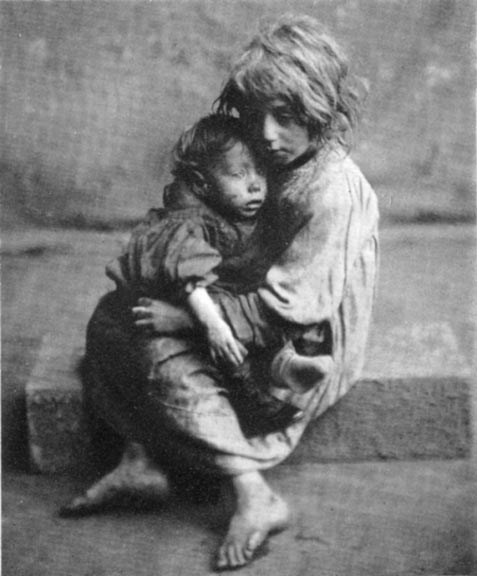
This photograph is definitely a situation because it’s not just happening to these children; it’s happening to many children all over the world. Many children are living on the streets with no food, clothing, or shelter. They literally have nothing. Yet, do many people do anything about it? Most of the time people are too busy worrying about themselves than to realize how much other people are suffering in the world. Orphanages are a refuge for children like this. Orphanages provide homes, clothing, food, and ease the burden of these children; even if only a little.
How does this relate to my topic? Well, I feel that in providing a refuge for many children all over the world, orphanages are indeed doing their job. We always tend to think of orphanages as adoption places; however, there is more to them than just finding a family for a child. They were built to provide shelter for children with a bad home life or for those who don't even have a home. They give many children dignity, so they don't have to live in shame all their lives. Most importantly orphanages provide children with hope that life can and will be better.
Tuesday, May 18, 2010
Care in Orphanages has improved!
Before I begin my assignment I want to state what my topic is. I want people to realize that sometimes orphanages are a better solution for children and that even though potential family numbers are low, they are still succeeding in their cause. I feel the media portrays all orphanages as terrible, and many times they aren’t. This article might seem kind of far-fetched according to my topic, but what made me choose it was this one sentence: “Since the middle part of this century, public housing was seen as a way to offer the poor more dignity.” Public housing includes orphanages. Orphanages truly do provide a more dignified way of living for many children. It is better for them to be in an orphanage than scrounging for a way to live on the streets, or to be in a family that doesn’t truly care for them or their needs.
Analysis:
The article, “As Times Change, How We Care for the Poor Evolves,” major premise is that as times have changed, so has care for the poor been improved. Diane Dunne doesn’t force the argument on her readers or act like she knows more than them; she simply states and informs her readers how things have changed. She uses a sequenced pattern that begins with what care for the poor was like many years ago until she reaches the point it is at today.
When reading through this article it is clear to see that she uses inductive reasoning instead of deductive. For example, Dunne tells how before the 1800s all who were poor lived in Almhouses. Later on she proceeds to say during the middle of the 1800s separate institutions were made for the different types of poor; which are homeless, parentless, having no food, and having no money. Dunne uses many examples like this one throughout the article to create a vivid image of how things were in the past and how they have become. These specific examples bring the audience to form the general idea that caring for the poor has improved.
Also, this article is one big analogy. As mentioned before the whole point of the article is to say that caring for the poor has improved and Dunne does it by comparing the past with the present. All in all, orphanages are poverty stricken children. Just like all the other institutions that have been provided for the poor, orphanages have improved with the times. However; people are so stuck on how they used to be that they can‘t see past the bad to recognize the good that has come from them.
Work Cited:
Dunne, Diane. “As Times Change, How We Care for the Poor Evolves.” Chicago Tribune 27 November 2001. http://www.chicagotribune.com/
Analysis:
The article, “As Times Change, How We Care for the Poor Evolves,” major premise is that as times have changed, so has care for the poor been improved. Diane Dunne doesn’t force the argument on her readers or act like she knows more than them; she simply states and informs her readers how things have changed. She uses a sequenced pattern that begins with what care for the poor was like many years ago until she reaches the point it is at today.
When reading through this article it is clear to see that she uses inductive reasoning instead of deductive. For example, Dunne tells how before the 1800s all who were poor lived in Almhouses. Later on she proceeds to say during the middle of the 1800s separate institutions were made for the different types of poor; which are homeless, parentless, having no food, and having no money. Dunne uses many examples like this one throughout the article to create a vivid image of how things were in the past and how they have become. These specific examples bring the audience to form the general idea that caring for the poor has improved.
Also, this article is one big analogy. As mentioned before the whole point of the article is to say that caring for the poor has improved and Dunne does it by comparing the past with the present. All in all, orphanages are poverty stricken children. Just like all the other institutions that have been provided for the poor, orphanages have improved with the times. However; people are so stuck on how they used to be that they can‘t see past the bad to recognize the good that has come from them.
Work Cited:
Dunne, Diane. “As Times Change, How We Care for the Poor Evolves.” Chicago Tribune 27 November 2001. http://www.chicagotribune.com/
Subscribe to:
Comments (Atom)
